
PCR is a technique used in the lab to make millions of copies of a particular section of DNA. It was first developed in the 1980s.
What is PCR?
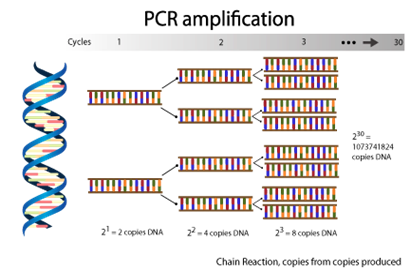
The polymerase chain reaction (PCR) was originally developed in 1983 by the American biochemist Kary Mullis. He was awarded the Nobel Prize in Chemistry in 1993 for his pioneering work.PCR is used in molecular biology to make many copies of (amplify) small sections of DNA or a gene. Using PCR, it is possible to generate thousands to millions of copies of a particular section of DNA from a very small amount of DNA. PCR is a standard tool used in medical and biological research labs and it can be used as a tool in genetic fingerprinting. It is used in the early stages of processing DNA for sequencing during infection, and when generating forensic DNA profiles from tiny samples of DNA. It helped in a lot of cold cases, by testing the evidence again. Forensic DNA typing has been an effective way of identifying or exonerating criminal suspects due to the analysis of evidence discovered at a crime scene. The human genome has many repetitive regions that can be found within gene sequences or in non-coding regions of the genome. In forensic science, it is used as a technique to identify someone based on their DNA profile. This technology can identify any one person from millions of others.
Examples
An example that PCR helped the scientist and police to solve a cold case in the 1980s and 1990s when a faceless killer stalked young women in the Seattle-Tacoma area. The case was known as the “Green River Killer “.Dozens of women, mostly prostitutes, eventually disappeared, sometimes only a few days apart, sometimes only once or twice a year. The killer had a consistent modus operandi: he would rape the women and strangle them with his hands or a ligature. The DNA testing was still in its infancy in the 1990s, and since officers lacked enough physical evidence to tie Mr Ridgway to the crimes, they were unable to arrest him. Several of those women were found in or close to the Green River.
In 2001, a one-two technological punch brought the case back to life. Forensic investigators decided to re-examine evidence compiled years before with the help of two new modes of DNA analysis. One of those technics was the polymerase chain reaction (P.C.R.). New tests were completed using new DNA profiles from three victims, they compared them with DNA extracted from a piece of gauze Mr Ridgway had chewed on in 1987. Confronted with the weight of the genetic evidence, Mr Ridgway pleaded guilty. He was sentenced to 48 consecutive life sentences with no chance of parole.
In 2001, a one-two technological punch brought the case back to life. Forensic investigators decided to re-examine evidence compiled years before with the help of two new modes of DNA analysis. One of those technics was the polymerase chain reaction (P.C.R.). New tests were completed using new DNA profiles from three victims, they compared them with DNA extracted from a piece of gauze Mr Ridgway had chewed on in 1987. Confronted with the weight of the genetic evidence, Mr Ridgway pleaded guilty. He was sentenced to 48 consecutive life sentences with no chance of parole.
 Forensic Files